Why order?
The things we learn by their sequence
Some things you don't just recognise — you have to know their order. The letters of the alphabet only work as a sequence; the numerals count in one direction; even the colours of a prayer flag are strung in a fixed line. Putting a jumbled row back in its right order is one of the oldest and best ways to make that sequence stick.
Each round shuffles a fresh stretch — a different window of the alphabet, a new run of numbers — so it never becomes rote. Drag, drop, and check.
Three sequences
What you'll put in order
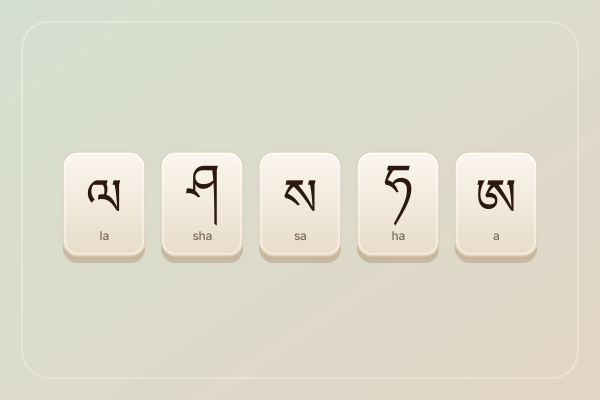
- The alphabet ཀ་ཁ་ག་ — consecutive letters from the thirty consonants, in their traditional teaching order.
- Prayer flags དར་ལྕོག — the five lung ta colours, always strung in the same fixed order.
- Numerals གྲངས་ཀ — a run of Tibetan numbers in counting order, often a two-digit stretch.
A closer look
The five colours, and why they never move
Prayer flags (lung ta, “wind horse”) always run in one order, because each colour is one of the five elements. String them wrongly and the world is out of order; string them right and the whole cosmos hangs on the rope, top to bottom:
The alphabet order follows the traditional thirty-consonant sequence, and the flag order — blue, white, red, green, yellow — the five elements as they are strung across the Himalaya.