Featured artist
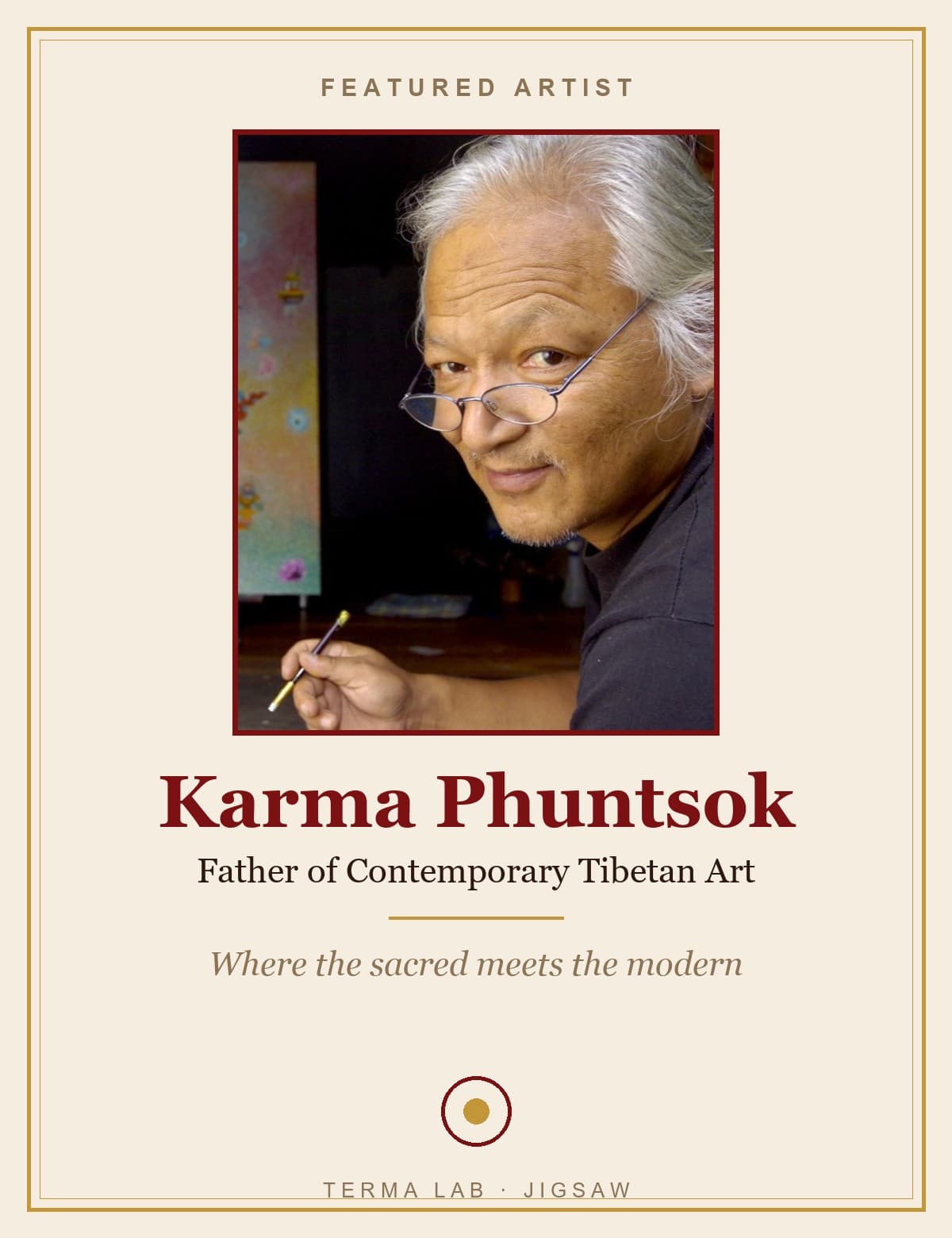
Karma Phuntsok ཀརྨ་ཕུན་ཚོགས་
Born in Lhasa in 1952, Karma Phuntsok fled Tibet with his family as a child in 1959. He trained in the old way — apprenticed to a master of traditional Tibetan thangka painting in Nepal in 1973 — and worked as a full-time thangka painter before migrating to Australia in 1980, where he paints to this day.
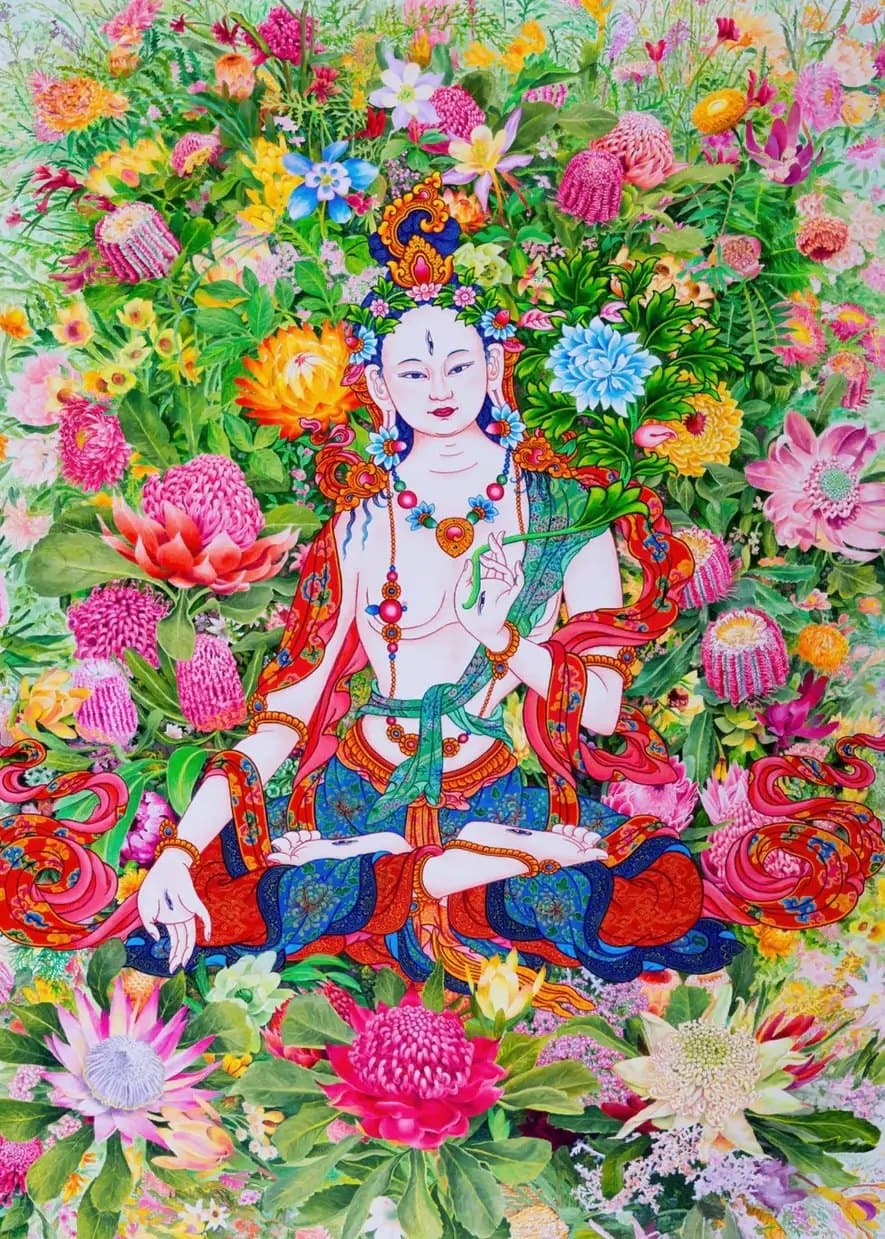
Widely considered a father of contemporary Tibetan art, he interweaves the techniques and sacred symbols of the thangka with modern life and imagination — deities seated above city skylines, or amid fields of wildflowers. His paintings are collected around the world. The puzzles here are his work. See more of his work →
Why a jigsaw?
Looking closely, piece by piece
You can glance at a picture and move on in a second. But to solve it as a jigsaw, you have to look — at a curve of line, a band of colour, the way one shape meets the next. A puzzle slows the eye down, and in slowing down you start to notice the craft and care that a quick glance skips right past.
It is also, simply, a lovely thing to do together — a quiet table game where hands and heads gather around a single image and slowly bring it into being.
What's in the box
Tibetan art & photography
Every puzzle here is a real work — a painting by a Tibetan artist, or a photograph — and never anything generated or generic. Each one carries a little card telling you what you're assembling and, for the artworks, who made it and where to see more of their work. The collection is designed to grow, one piece at a time.
How to play
Pick, assemble, zoom
Choose an image and a difficulty — a handful of big pieces, or a proper challenge of many small ones. Drag pieces around the board; when two fit, they snap together. Pinch or scroll to zoom in on the detail, and your progress saves as you go, so you can leave a puzzle half-done and come back. Finish the board to see your score.
Stuck? Zoom right in and work one corner at a time — edges and strong colours first, then the tricky middle.
Every image is real Tibetan art or photography, credited to its maker — and the artworks link back to the artist, so a puzzle is also a small way to send people to their work.