Why a postcard?
Tashi delek — good fortune to you
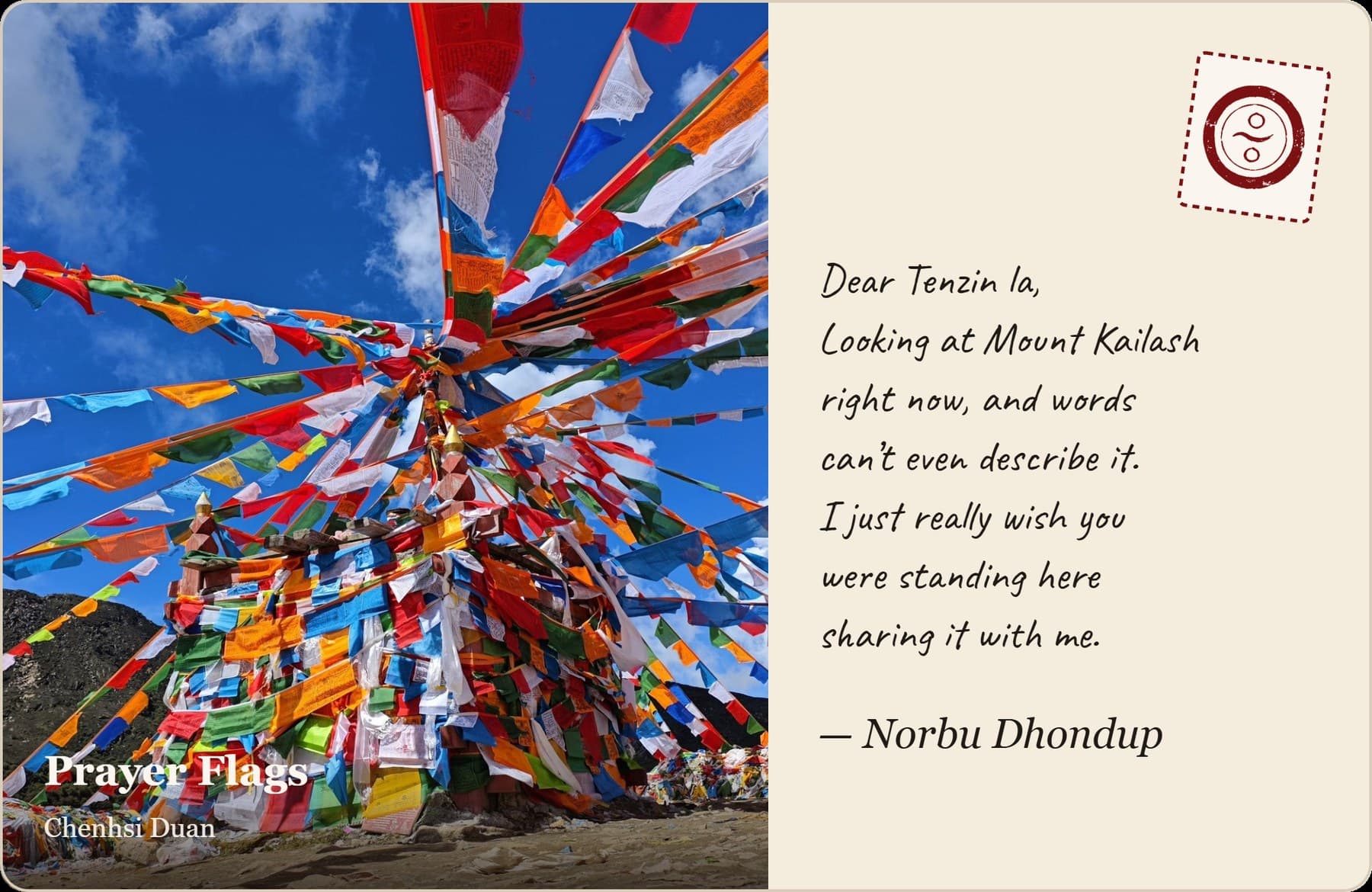
So much of Tibetan life is a wish spoken aloud for someone else — tashi delek, may all be auspicious and well. Blessings are hung on the wind as flags, painted over doorways, whispered at farewells. A postcard is the same impulse made small enough to hold: a picture and a good wish, kept or given.
For a family scattered across the world, a card that says tashi delek in Tibetan is a tiny, portable piece of home — and making one is a gentle way to practise a few Tibetan words.
How it works
Pick, write, keep
- Choose a scene — a Tibetan artwork for the front of your card, each one credited to its maker.
- Write your blessing — type in English, or in Tibetan: spell the sounds and they turn into Tibetan script as you go.
- Keep it — download your finished postcard as an image, or share it straight away.
The Tibetan typing uses the same phonetic method behind our TermaType keyboard — write bkra shis bde legs and watch བཀྲ་ཤིས་བདེ་ལེགས། appear.
Every artwork carries its artist and source, kept on the card and in the image you download — a small way to honour the hands that made it.